
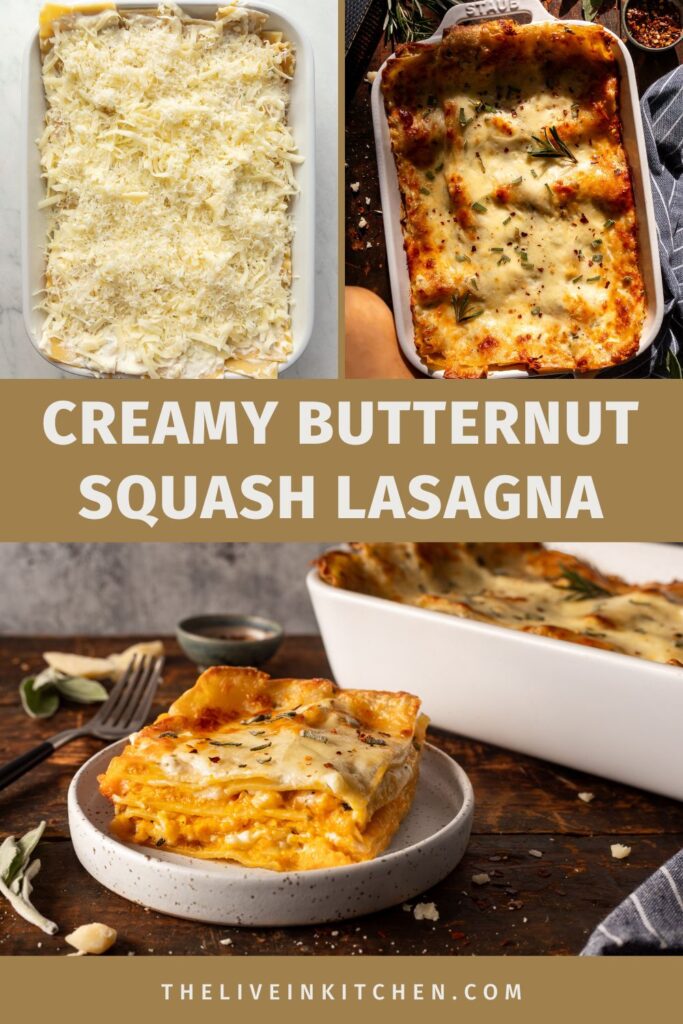
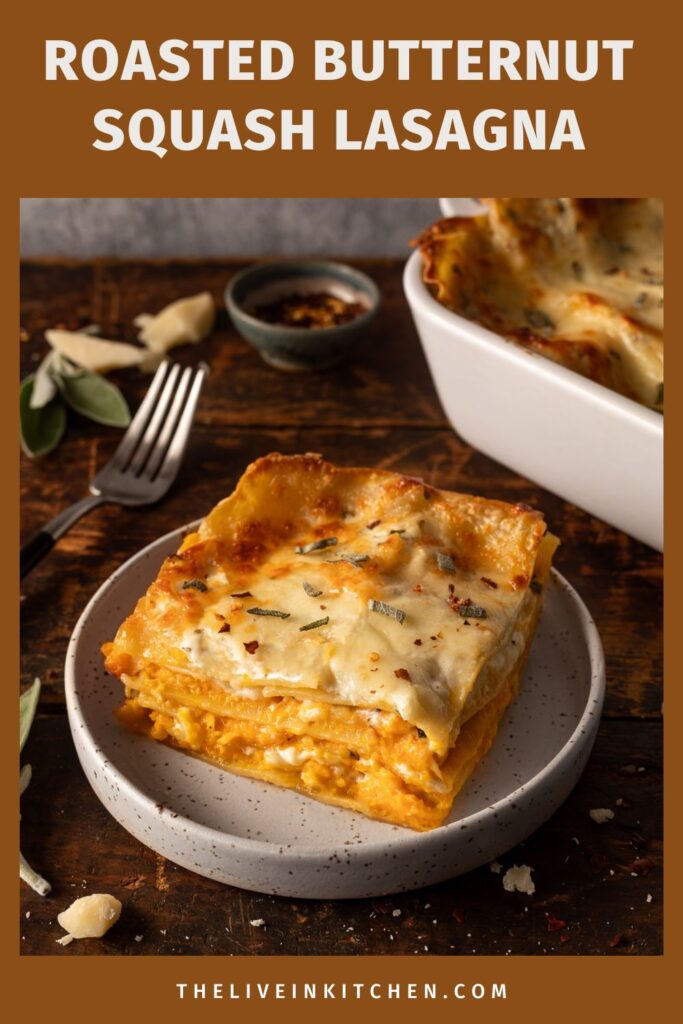
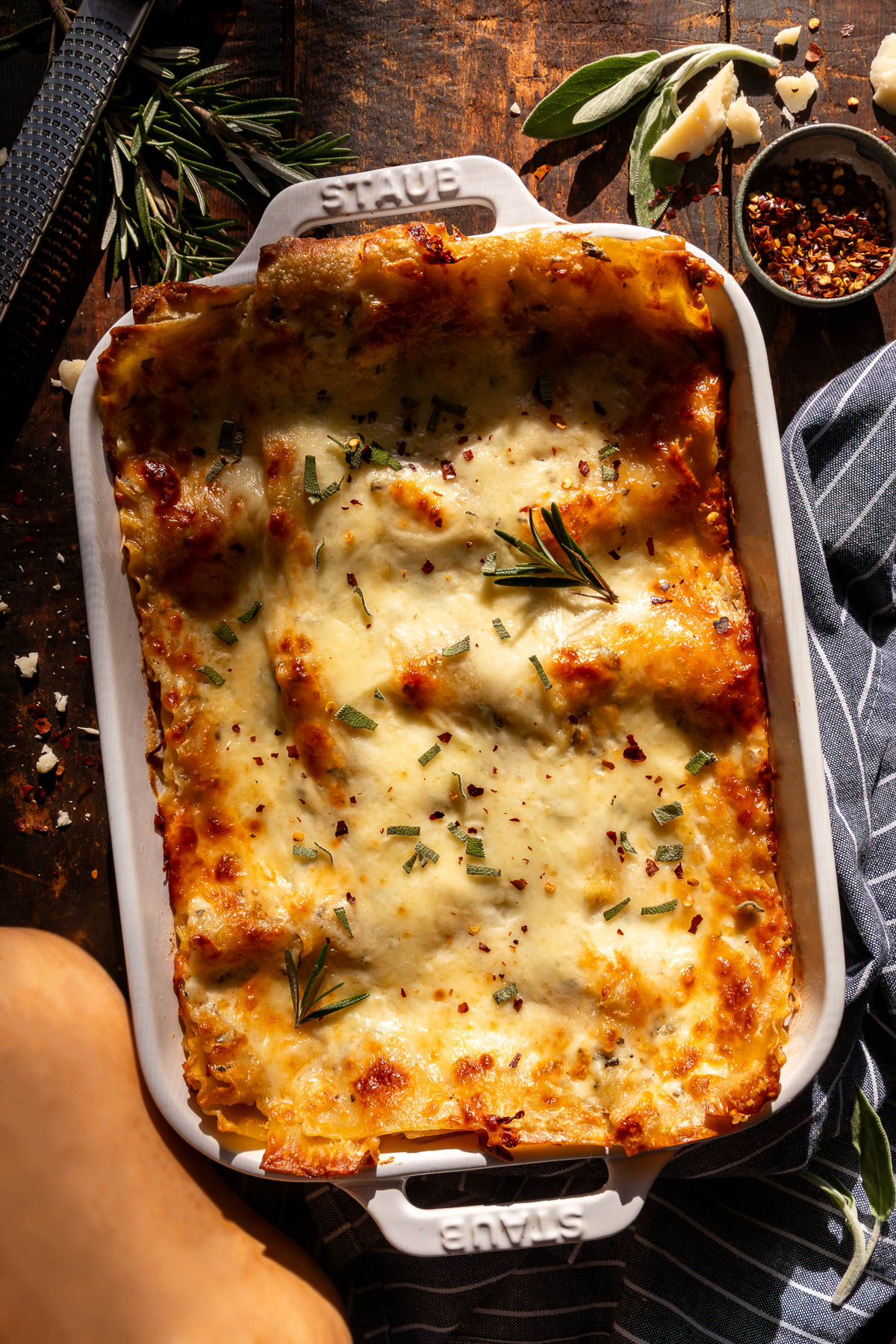
Butternut squash lasagna is fall comfort food at its best. Layers of noodles, cheese, creamy squash, and garlic cream sauce will keep your family coming back for more.
This post contains affiliate links. As an Amazon Affiliate I earn from qualifying purchases. All opinions are my own.
I think butternut squash is my favorite of the squashes.
The bright orange color means it's full of nutrients, the creamy texture is never stringy like some other squash can be, and the flavor just makes sense in so many different ways.
This is one of the most comforting recipes I've ever developed thanks to loads of cream and cheese. But don't let that scare you away, it's ok to enjoy something heavy once in a while (and I've included ideas for how to reduce fat and calories below if you just can't do it!).
This would make a great vegetarian option to have at your Thanksgiving dinner. It's hearty enough to be a main dish, and easy to slice into small portions so even the meat eaters can enjoy it as a side.
While you can easily make this gluten free (see below), this is one time that I do not recommend making vegan swaps because I just love the dairy too much. If you prefer a vegan lasagna, I recommend trying this vegan butternut squash lasagna from Nora Cooks.
Ingredients
- Butternut squash
- Olive oil
- Coarse kosher salt and freshly ground black pepper
- Shallot
- Whole milk ricotta cheese
- Milk
- Ground nutmeg
- Salted butter
- Garlic
- All-purpose flour
- Heavy cream
- Fresh sage
- Fresh rosemary
- Parmesan cheese
- Lasagna noodles
- Mozzarella cheese
- Fontina cheese
- Red pepper flakes
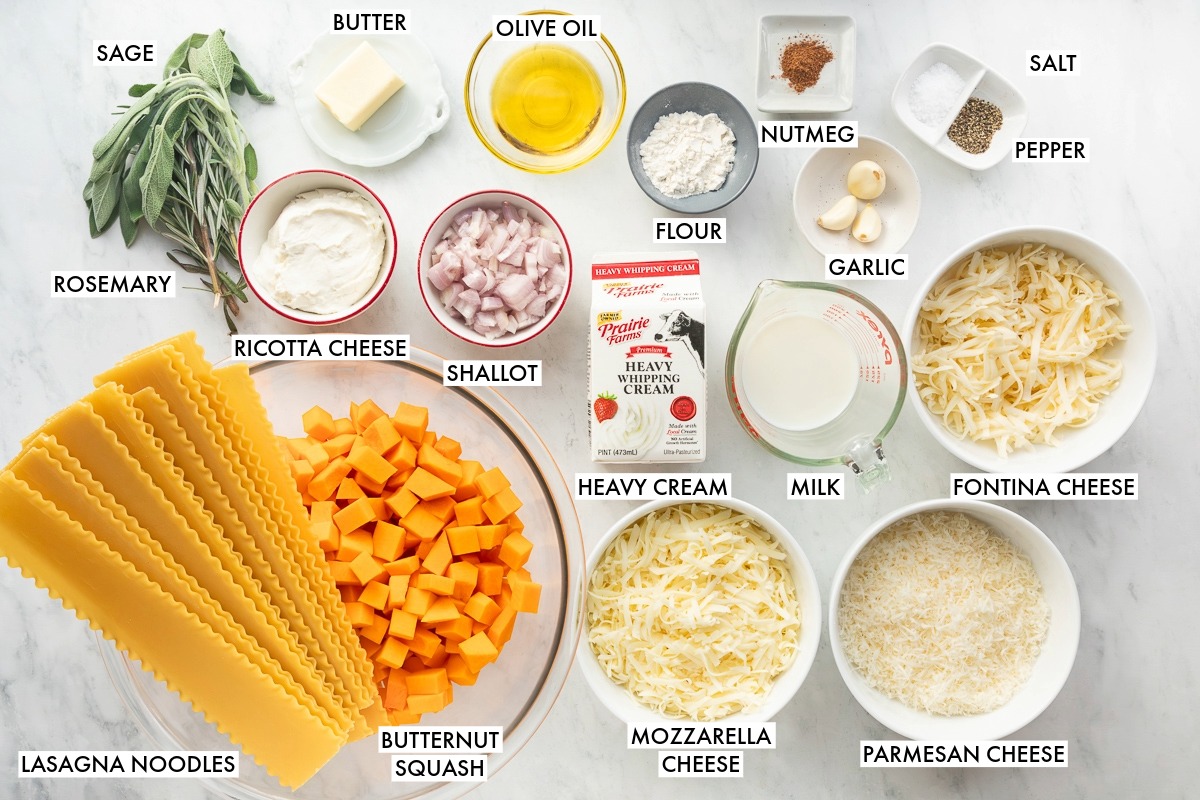
How to make butternut squash lasagna
- Preheat the oven to 400ºF.
- Arrange the diced squash on a rimmed baking sheet and drizzle with olive oil. Stir to coat. Sprinkle with salt and pepper to taste. Bake for 20 minutes.
- Add the shallot to the pan with the squash, stir to combine, and return to the oven for another 15 minutes or until the shallot is soft and the squash is beginning to brown. After removing the squash, reduce the oven temperature to 375ºF.
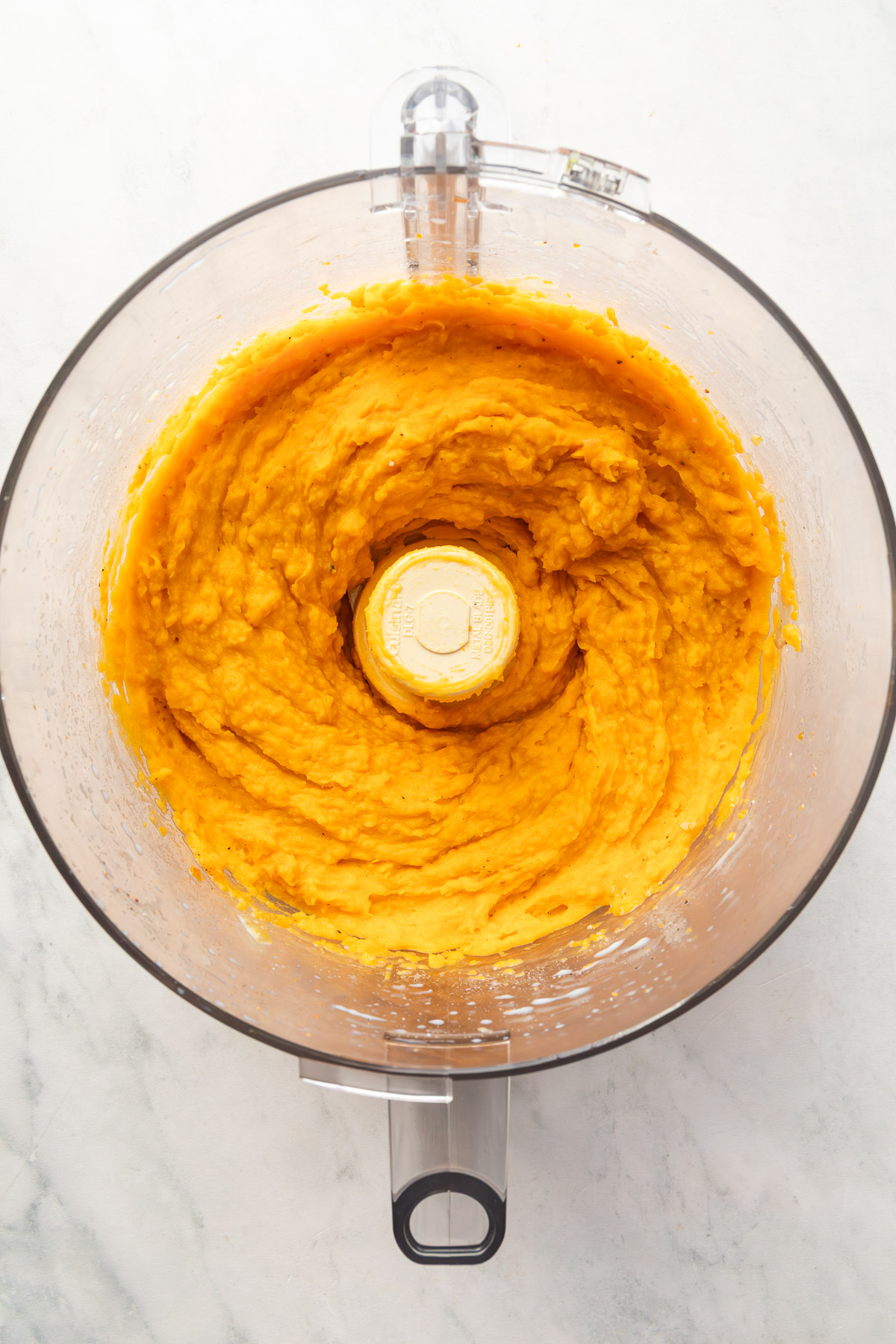
- Allow the squash and shallots to cool slightly before adding them to a food processor with the ricotta, milk, and nutmeg. Process until smooth, then taste and adjust the seasoning as needed (I like to add another big pinch of salt and pepper).
- Bring a large pot of water to a boil, add two big pinches of salt, and cook the lasagna noodles according to package directions. When done, drain the noodles in a colander and rinse with cold water until cool to the touch. Set aside.
- Heat butter in a 2 quart saucepan over medium heat. Once melted, add the garlic and cook, stirring, for 1 minute.
- Add the flour and cook, stirring, for another minute.
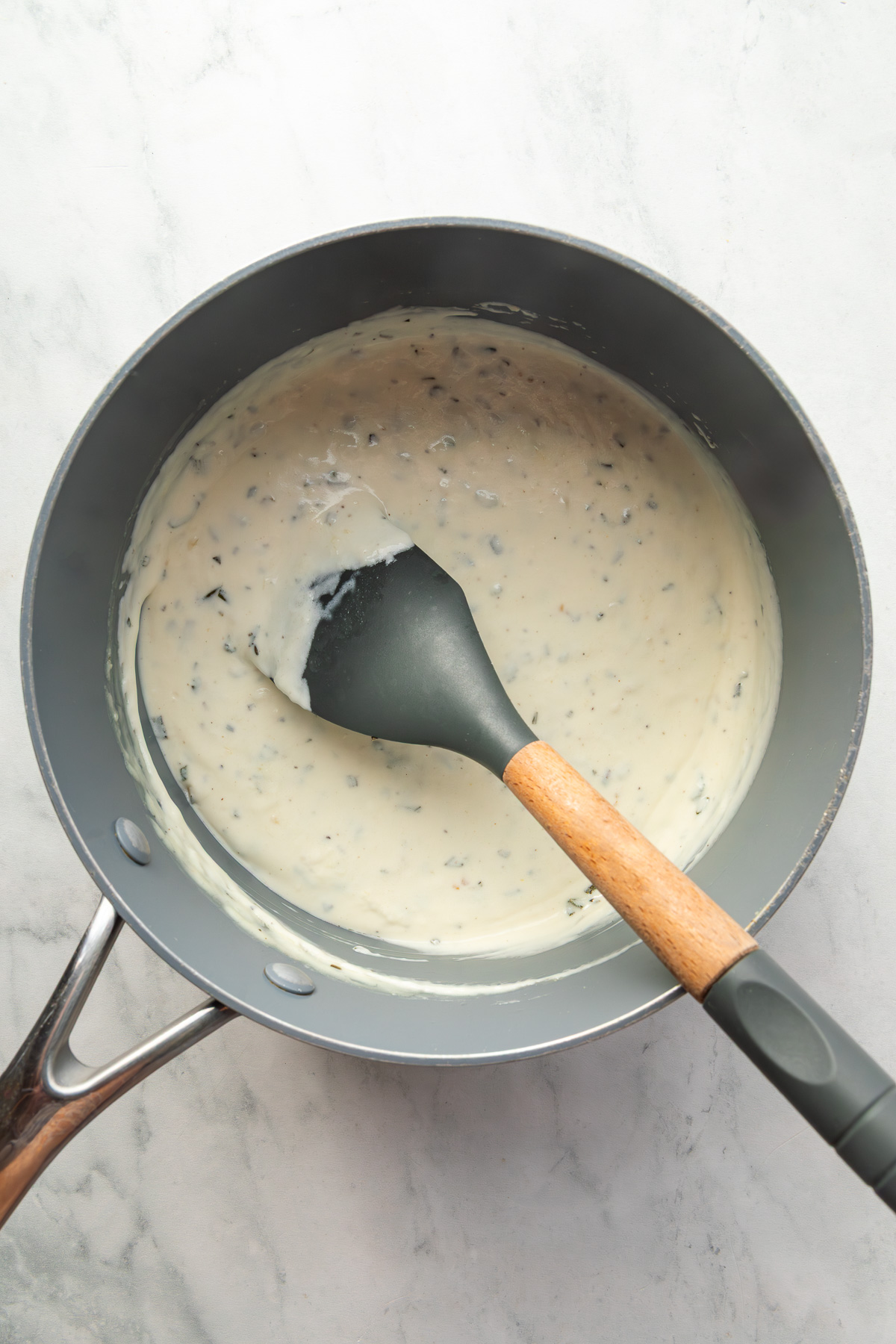
- Add the heavy cream, sage, and rosemary and ½ cup parmesan cheese. Stir to combine. Bring to a simmer and let cook, stirring occasionally, until slightly thickened, 5-10 minutes. Remove from the heat but keep warm until ready to use.
- In a medium bowl, use your hands to mix together the mozzarella, fontina, and 1 cup of parmesan cheese.
- To assemble the lasagna, spray a 9x13 baking dish with cooking spray.
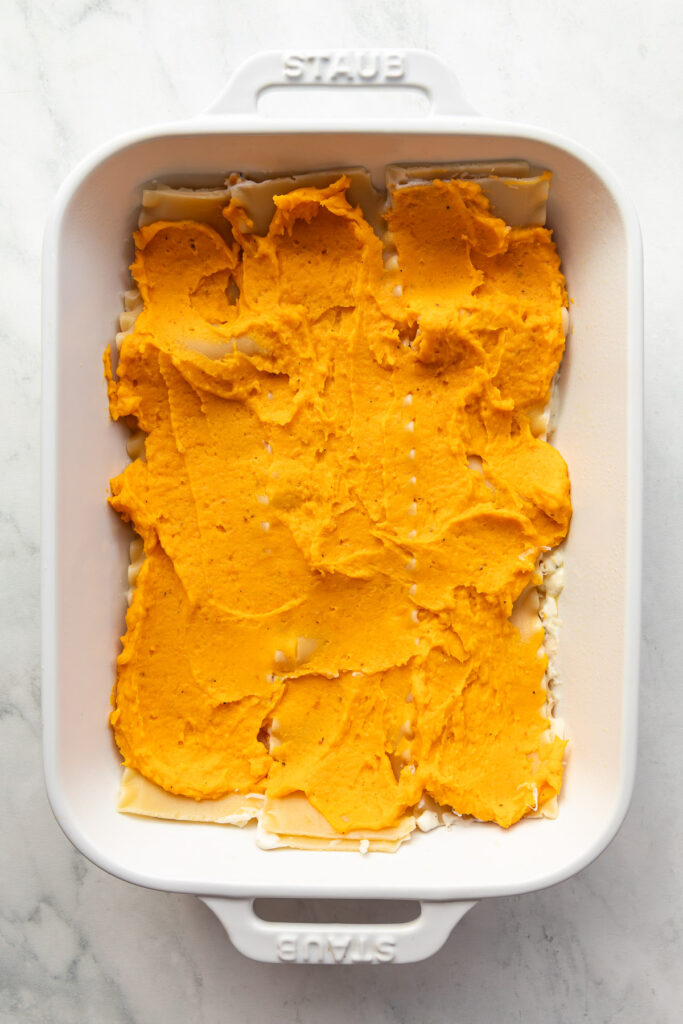
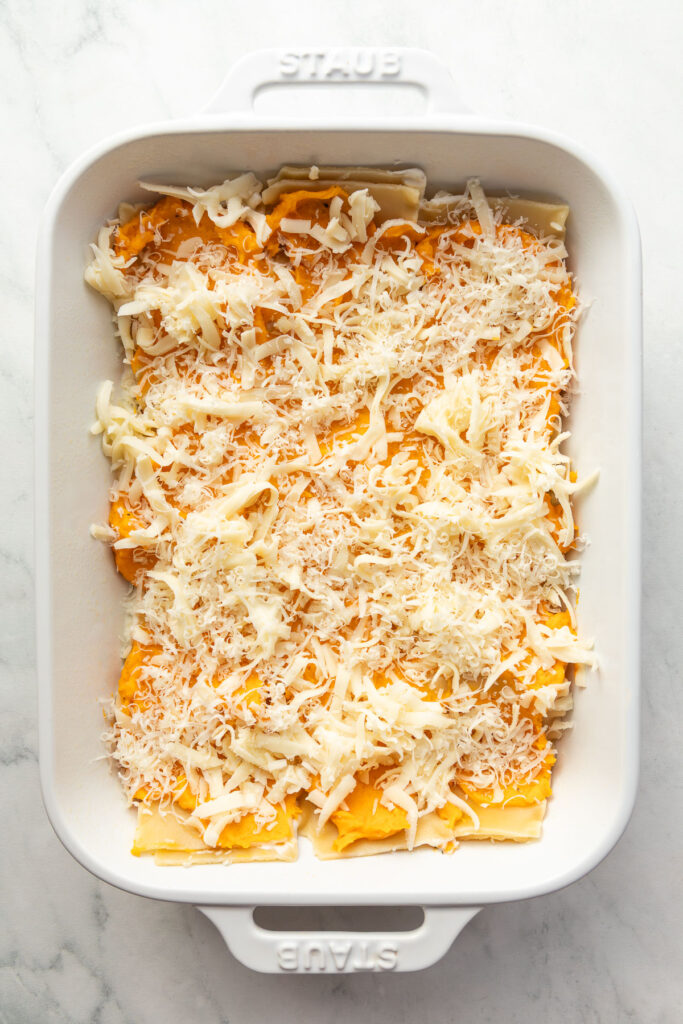
- Add a little cream sauce to the bottom of the pan and spread it out. Top this with four lasagna noodles. Spread ⅓ of the squash mixture on top of the noodles and top that with ¼ of the mozzarella mixture.
- Repeat these layers of sauce, noodles, squash, and cheese two more times so that you have three layers of everything. You don't need too much sauce in these layers, just a little bit for each area of the lasagna.
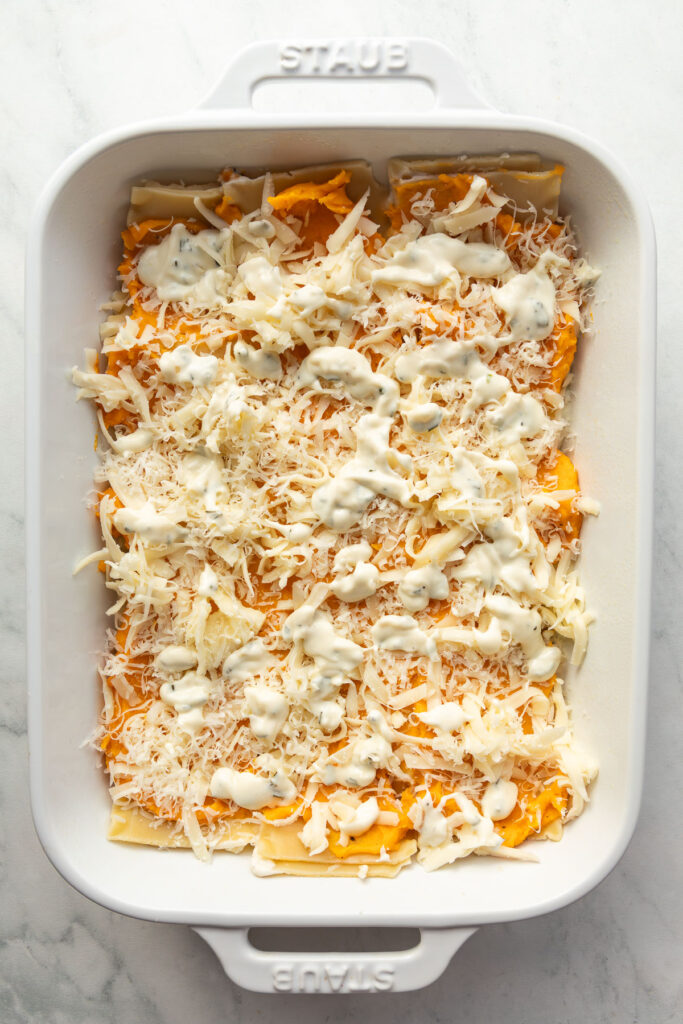
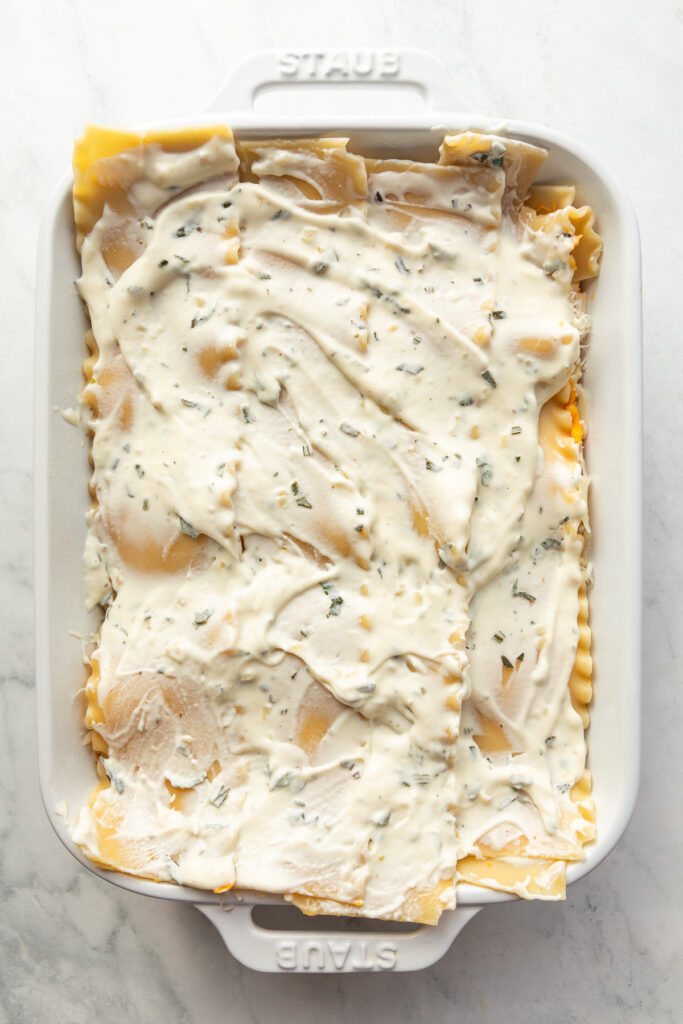
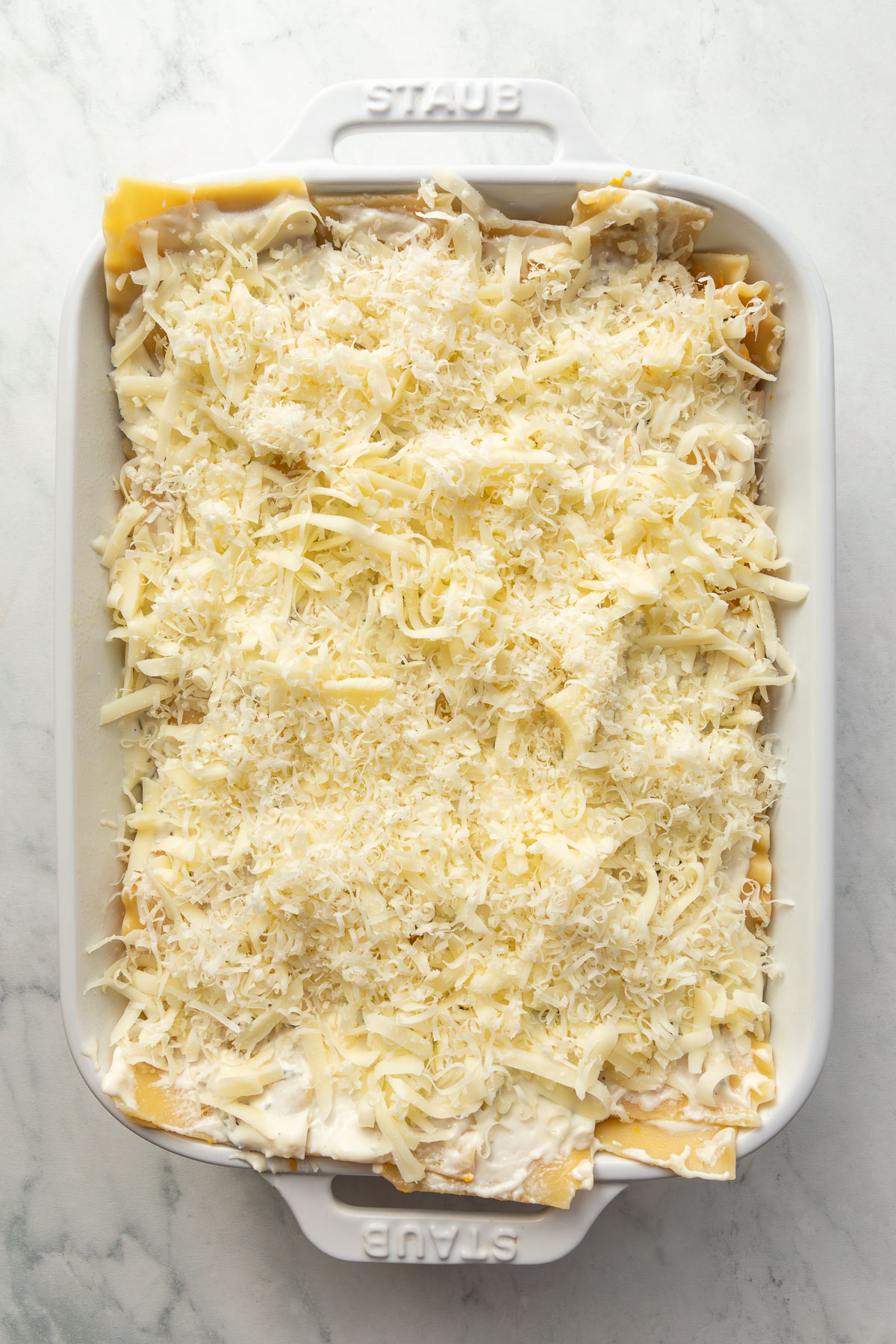
- Top these layers with another layer of sauce, noodles, and the remaining sauce. Spread the final layer of sauce out to completely cover the noodles. Top this with the remaining cheese.
- Cover the lasagna with aluminum foil and bake at 375ºF for 30 minutes.
- Remove the foil and bake for another 10-20 minutes or until everything is melted, bubbly, and beginning to brown.
- Let the lasagna rest for 15 minutes before slicing and serving. Top with fresh chopped sage and crushed red pepper flakes if desired.
Top tips
Time saving tips
This is one of the more time intensive recipes I have on my site, but it's 100% worth it in my opinion. If you don't want to do it all at once you can cook your lasagna noodles the day before, rinse with cold water, and store in a covered container in the refrigerator until ready to assemble.
You can also cook the squash up to 3 days in advance, as well as mix up your mozzarella/fontina/parmesan cheese mixture. I recommend making your sauce as close to assembling as possible since cream can sometimes split when going from hot to cold.
I haven't tested assembling the entire lasagna and refrigerating for a day before baking or freezing before baking, but I think it would probably work. If you do try this you'll likely need to add a few minutes to the cooking time to make sure it's warm throughout.
How to layer a lasagna
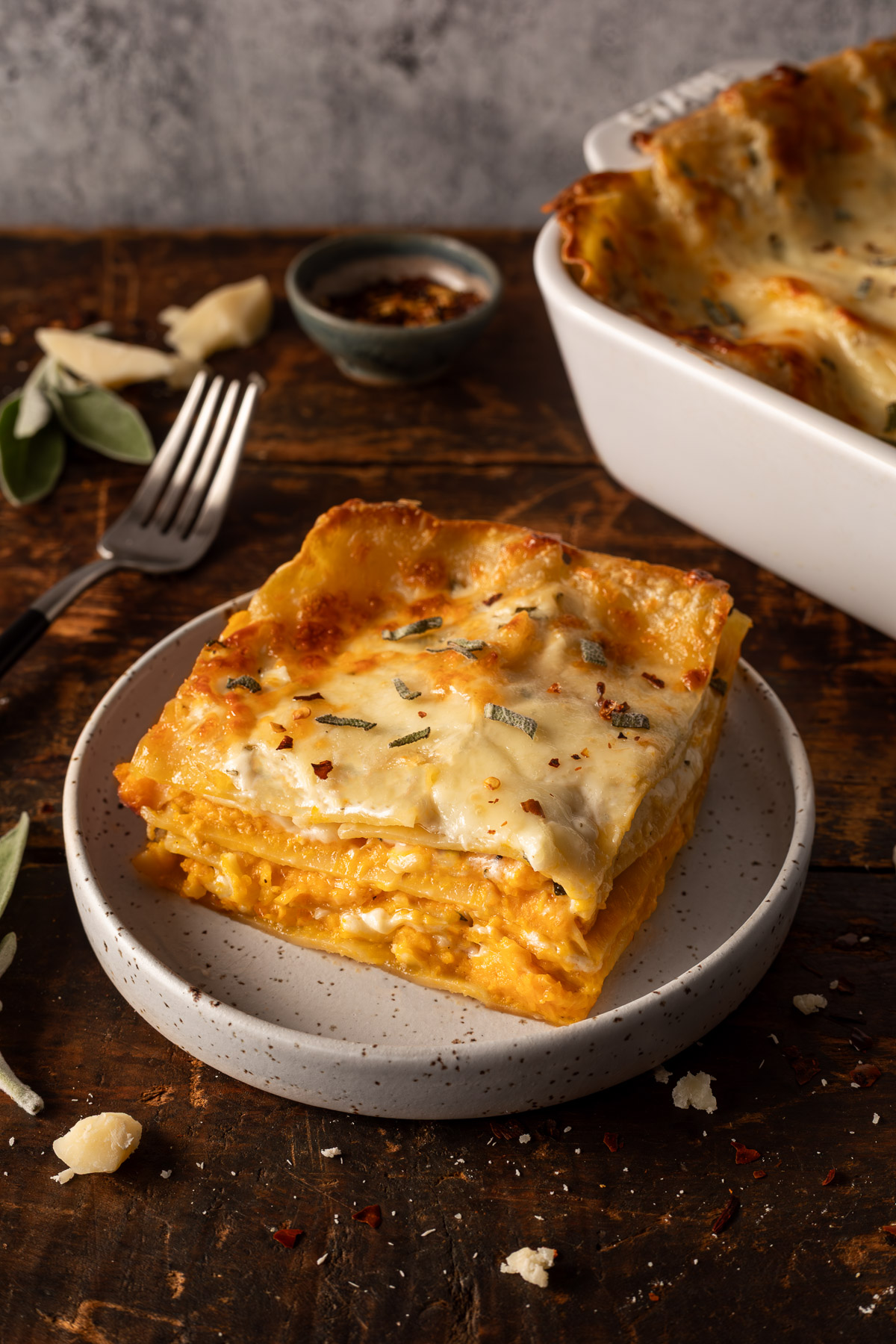
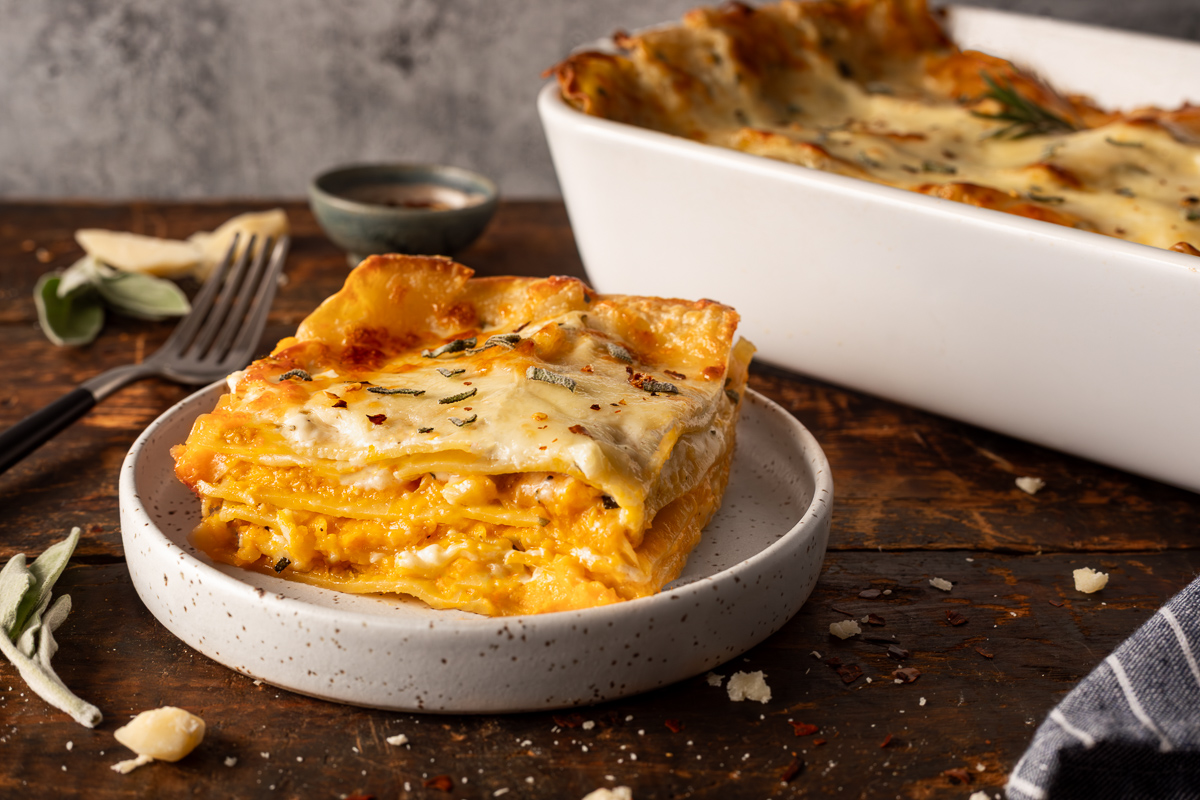
Overall you should have five layers of sauce, four layers of noodles, three layers of squash, and four layers of cheese. This is how it should look (the bottom of the list is the bottom of the pan):
- Cheese
- Sauce
- Noodles
- Sauce
- Cheese
- Squash
- Noodles
- Sauce
- Cheese
- Squash
- Noodles
- Sauce
- Cheese
- Squash
- Noodles
- Sauce
How to peel and cut a butternut squash
You can use a vegetable peeler to remove the outer skin of your squash, but I find it fastest to use a large chef's knife to cut off the top and bottom of the squash, then stand it up and remove the skin by cutting down from top to bottom.
I almost always cook my butternut squash cut into cubes rather than cutting it in half and roasting it whole because it cooks so much faster and gives you lots of caramelization on every piece instead of just on the cut edge.
For tips on how to cut a butternut squash and how to cook it both ways, check out my post about how to make butternut squash puree.
Don't overcook the noodles
Whenever I'm making a baked pasta dish I always cook the noodles one minute shy of al dente. This gives the pasta the opportunity to absorb some of the liquid from the sauce without becoming overcooked and mushy.
When the pasta is done boiling, drain it in a colander and run it under cold water until cool to the touch. This will stop the cooking, keep it from sticking together, and allow you to handle it easily.
If your pasta is resting while you prepare your other ingredients, the excess water may evaporate before you assemble your lasagna. If it is still very wet when assembling, you can pat the pasta with a clean kitchen towel to remove any excess moisture.
How to store
Keep leftovers covered in the refrigerator for up to 3 days. You can also freeze slices of lasagna for up to 3 months. The garlic parmesan sauce may split when reheating, but it will still be delicious!
What size pan to use for lasagna
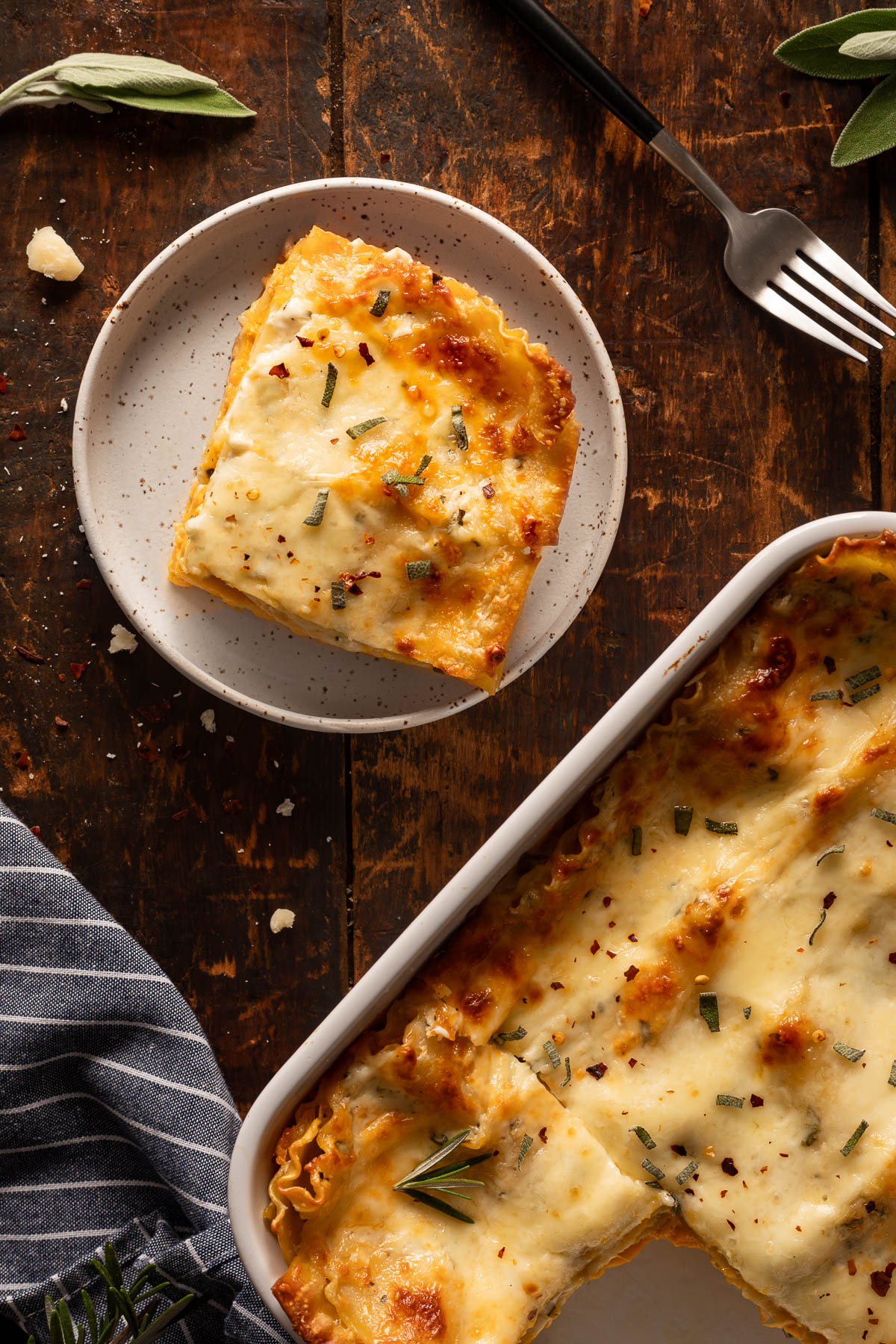
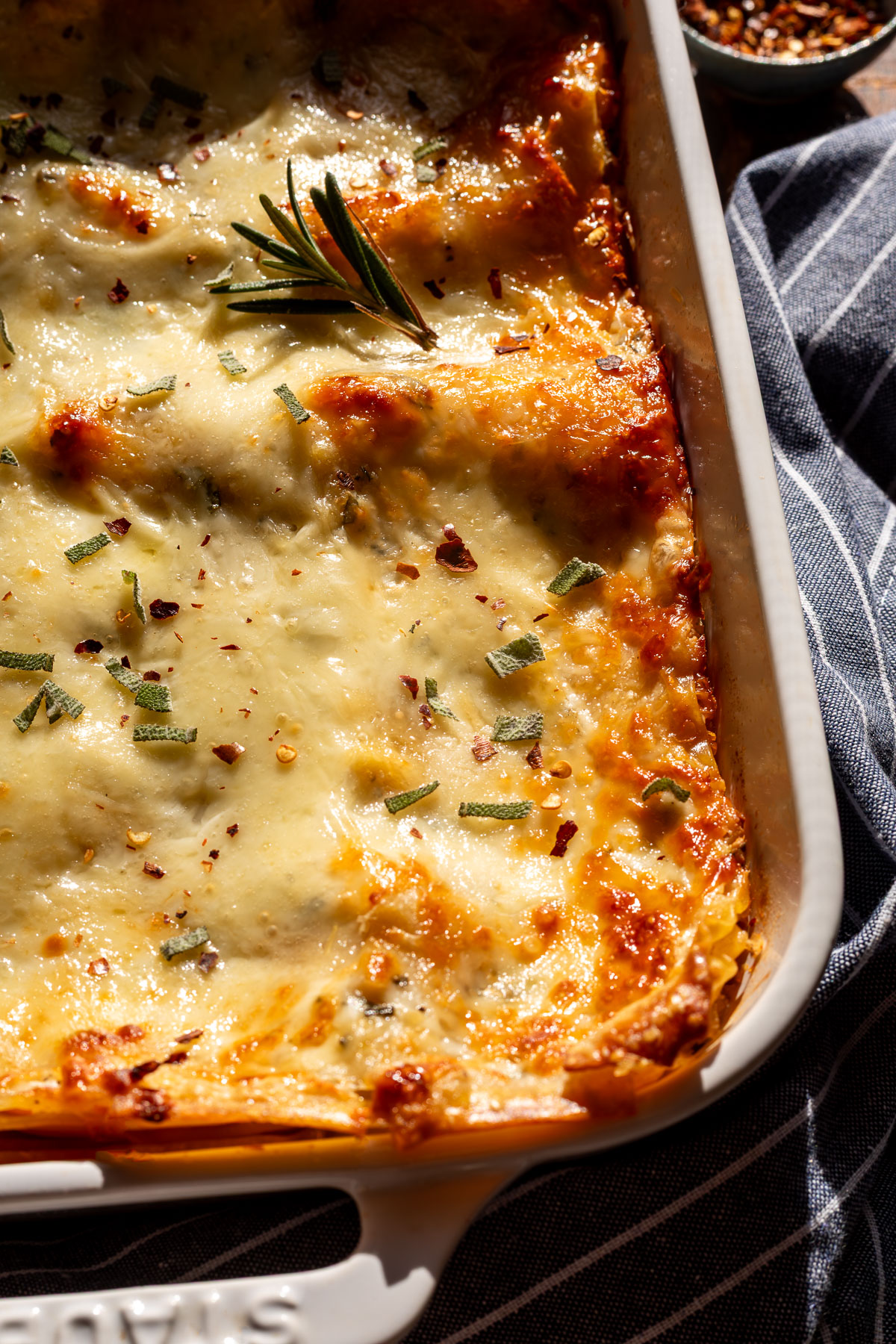
I recommend using a 9x13 baking dish (glass or otherwise is fine) to make lasagna. I used a slightly smaller pan for photos because my usual pan isn't very photogenic. Yours will look the same except it will have four sheets of lasagna across instead of three.
Tips for customizing butternut squash lasagna
- If you prefer a thinner sauce you can omit the flour
- Swap half the heavy cream for milk to reduce fat and calories
- Use a lower fat ricotta cheese, or omit it entirely if you prefer
- Swap the fontina for an equal amount of additional mozzarella
- Add more fresh chopped sage and crushed red pepper flakes to taste
- Add one box of frozen chopped spinach, thawed and squeezed of excess moisture, to the squash puree
FAQ
Yes, you can make this lasagna gluten-free by using gluten-free lasagna noodles and omitting the flour from the sauce.
Seven cups of cubed squash will likely be more than one squash but less than two. I like to buy two medium sized squashes, cut up the necks, and then see if I need to mess around with cutting the bulb, which can be more difficult.
I have not tested this with no boil lasagna noodles and therefore cannot make a recommendation on this. I generally don't think there would be enough liquid in this recipe to cook the no boil noodles, but feel free to do your own experiments.
No, while this garlic parmesan sauce is similar to a bechamel, it is technically more of a Mornay sauce because I'm adding cheese. I like it better because it's more cheesy and flavorful.
Real parmesan cheese is not vegetarian because it is made with animal rennet. Look for a parmesan cheese made with vegetable rennet if this is important to you.
More vegetarian pasta recipes
- Halloumi Stroganoff
- Penne al Pomodoro
- Spaghetti Arrabbiata
- Tomato and Feta Pasta
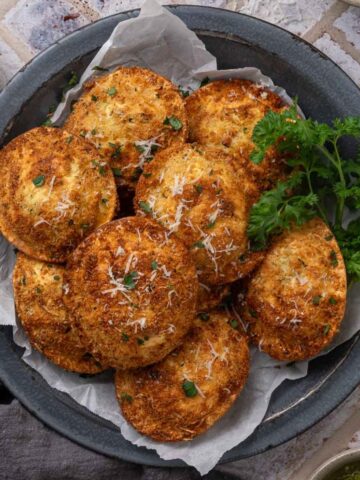
- Baked Ravioli
- Easy Fettuccine Alfredo
- Spaghetti Aglio Olio
- Pesto Linguine
- Roasted Vegetable Lasagna
- Roasted Garlic and Broccoli Pasta
- Olive Oil Alfredo Sauce
- Halloumi Carbonara
- Meatless Baked Ziti
- Halloumi Pasta
If you make this recipe, be sure to rate it, leave a comment, or tag #theliveinkitchen on Instagram!

Recipe
Butternut Squash Lasagna
Ingredients
- 7 cups diced butternut squash, from about 2 small/medium butternut squashes
- 1 ½ tablespoons olive oil
- Coarse kosher salt and freshly ground black pepper
- ⅔ cup minced shallot
- ½ cup whole milk ricotta cheese
- ½ cup milk, I used 2%
- ¼ teaspoon ground nutmeg
- 3 tablespoons salted butter
- 3 cloves garlic, minced
- 1 tablespoon all-purpose flour
- 2 cups heavy cream
- 1 ½ tablespoon fresh minced sage, plus more for garnishing if desired
- 1 tablespoon fresh minced rosemary
- 1 ½ cups freshly grated parmesan cheese, divided
- 16 ounces uncooked lasagna noodles
- 2 cups shredded mozzarella cheese
- 1 cup shredded fontina cheese
- Crushed red pepper flakes, optional
Instructions
- Preheat the oven to 400ºF.
- Arrange the diced squash on a rimmed baking sheet and drizzle with olive oil. Stir to coat. Sprinkle with salt and pepper to taste. Bake for 20 minutes.
- Add the shallot to the pan with the squash, stir to combine, and return to the oven for another 15 minutes or until the shallot is soft and the squash is beginning to brown. After removing the squash, reduce the oven temperature to 375ºF.
- Allow the squash and shallots to cool slightly before adding them to a food processor with the ricotta, milk, and nutmeg. Process until smooth, then taste and adjust the seasoning as needed (you may want more salt and pepper).
- Bring a large pot of water to a boil, add two big pinches of salt, and cook the lasagna noodles according to package directions. When done, drain the noodles in a colander and rinse with cold water until cool to the touch. Set aside.
- Heat butter in a 2 quart saucepan over medium heat. Once melted, add the garlic and cook, stirring, for 1 minute.
- Add the flour and cook, stirring, for another minute.
- Add the heavy cream, ½ cup parmesan cheese, sage, and rosemary and stir to combine. Bring to a simmer and let cook, stirring occasionally, until slightly thickened, 5-10 minutes. Remove from the heat but keep warm until ready to use.
- In a medium bowl, use your hands to mix together the mozzarella, fontina, and 1 cup of parmesan cheese.
- To assemble the lasagna, spray a 9x13 baking dish with cooking spray.
- Add a little cream sauce to the bottom of the pan and spread it out. Top this with four lasagna noodles. Spread ⅓ of the squash mixture on top of the noodles and top that with ¼ of the mozzarella mixture.
- Repeat these layers of sauce, noodles, squash, and cheese two more times so that you have three layers of everything. You don't need too much sauce in these layers, just a little bit for each area of the lasagna.
- Top these layers with another layer of sauce, noodles, and the remaining sauce. Spread the final layer of sauce out to completely cover the noodles. Top this with the remaining cheese.
- Cover the lasagna with aluminum foil and bake at 375ºF for 30 minutes.
- Remove the foil and bake for another 10-20 minutes or until everything is melted, bubbly, and beginning to brown.
- Let the lasagna rest for 15 minutes before slicing and serving. Top with fresh chopped sage and crushed red pepper flakes if desired.
Notes
Tips for customizing butternut squash lasagna
- Swap the homemade garlic parmesan sauce for a jar of store bought alfredo sauce
- Roast your butternut squash simply cut in half with the seeds removed, coating in olive oil and sprinkling with salt and pepper, adjusting the baking time as needed
- Add more fresh chopped sage and crushed red pepper flakes to taste
- Add an extra layer of plain ricotta
- Thaw a box of frozen chopped spinach, squeeze it to remove excess moisture, and add it to the butternut squash puree
How to layer this lasagna
Here is a reference you can check off to keep track of your lasagna layers. They are listed in the order you would put them in the pan (cream sauce goes in first, cheese blend is on the very top):- Cream sauce
- Lasagna sheets
- Squash
- Cheese blend
- Cream sauce
- Lasagna sheets
- Squash
- Cheese blend
- Cream sauce
- Lasagna sheets
- Squash
- Cheese blend
- Cream sauce
- Lasagna sheets
- Cream sauce
- Cheese blend


Annie says
Hi Lindsay, butternut squash is a difficult peel - I roast diced, unpeeled squash and eat the lot in soup or a pie - there’s got to be nutrients in the skin!
I’ve not yet made the lasagne recipe but I love the sound of it!
So … to peel or not to peel, what are your thoughts?